





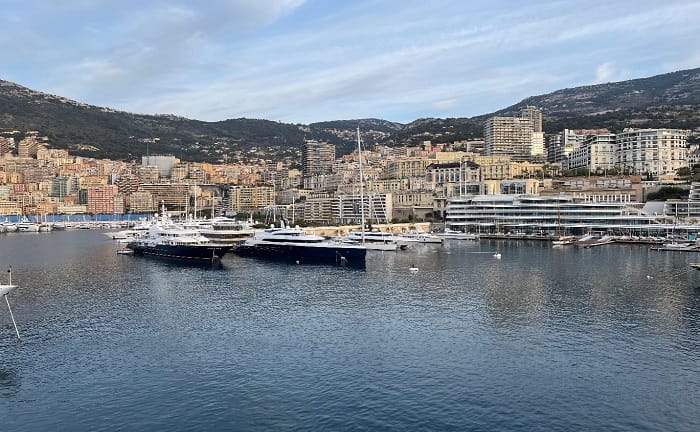
Monte-Carlo resort, one of Monaco’s four quarters (sections), is situated on an escarpment at the base of the Maritime Alps along the French Riviera, on the Mediterranean, just northeast of Nice, France.
Monaco is the smallest country in the world, and home to the oldest ruling family in Europe, the Grimaldis. Considered the gem of the French Rivera, Monte Carlo is where the rich a famous meet the rich and famous. We know Monte Carlo for its green-domed casino, featured in multiple James Bond movies, and home to the late Sean Connery, the most famous actor portraying the fictional Bond.
The Marina in Monte Carlo with multimillion-dollar yachts docked
Many couldn’t wait to try their luck at the roulette tables in Monte Carlo’s famous casino; we decided to tour Nice, France.
Nice, situated on the French Riviera, is known for its fantastic climate, beautiful coastline, great restaurants, phenomenal beaches, and beautiful architecture.
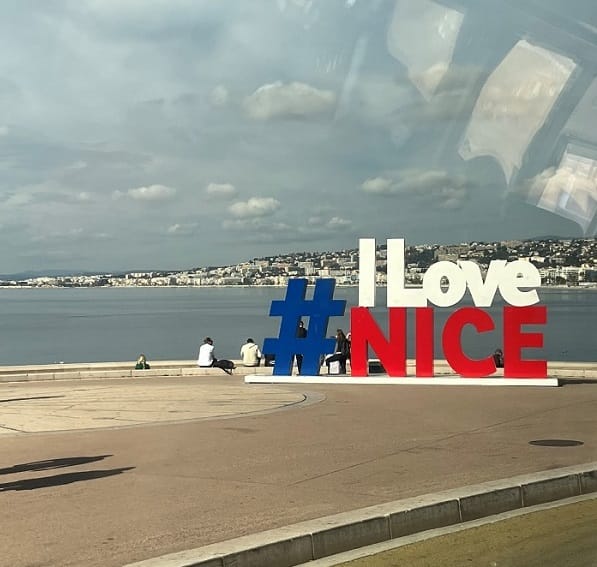
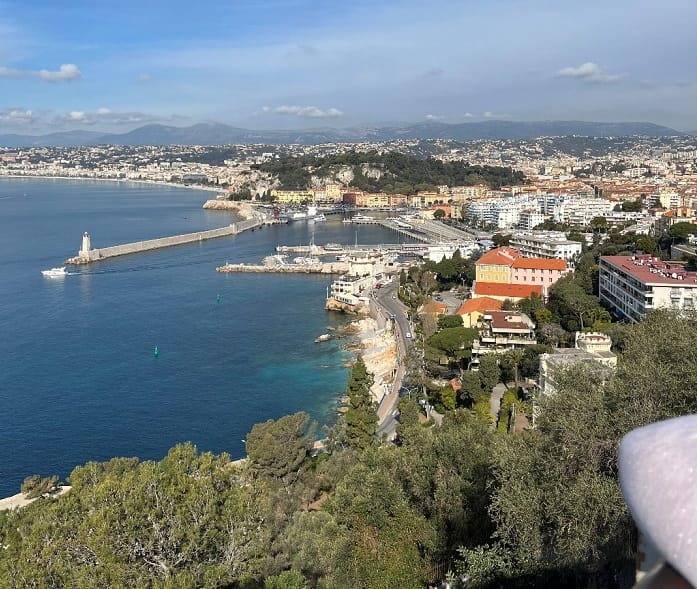
The beautiful coastline of Nice, France
Nice, France, averages 300 days of sunshine, making its beaches a highlight. A blend of Italian and French cuisine, the restaurants offer something for every palate. But, of course, we know the city for its natural and beautiful views. It has historically been the home of many of Europe’s excellent artists, including Pablo Picasso, Claude Monet, Paul Cezanne, and Henri Matisse.
We strolled through Nice’s Old Town, enjoying the many vendors on both sides of its narrow streets.
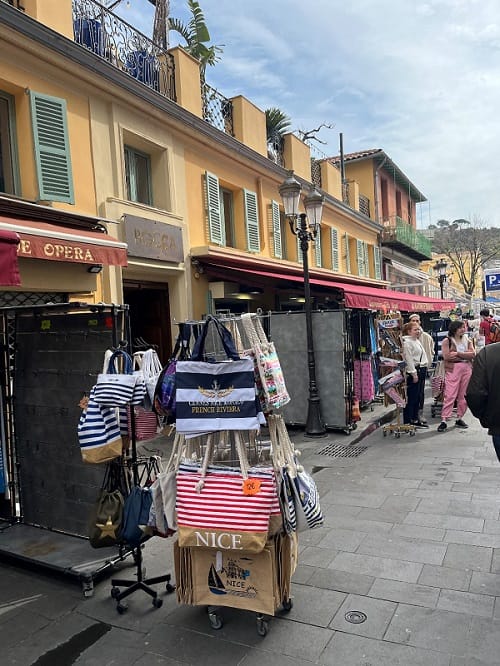
Shopping in Nice’s Old Town
A must-see in Nice is the controversial sculpture of Apollo. In the heart of Nice is the city’s main square, Place Massena, where you will see the “Fontaine du Soleil,” the Sun Fountain. At its center is the famous statue of Apollo, surrounded by the Greek deities Earth, Mars, Mercury, Saturn, and Venus. Then, the sculptures of seven Buddhists sitting on tall stilts just a short walk from Apollo.
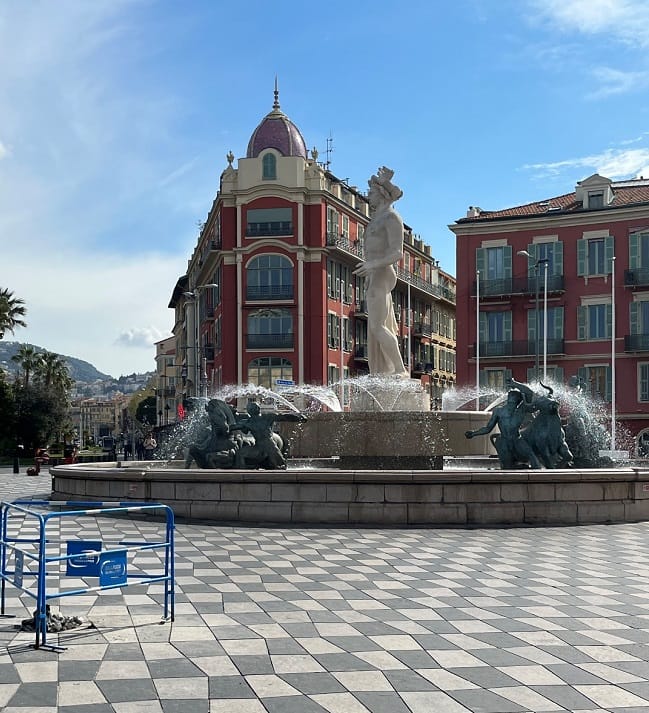
The Sun Fountain and the statue of Apollo in Place Massena
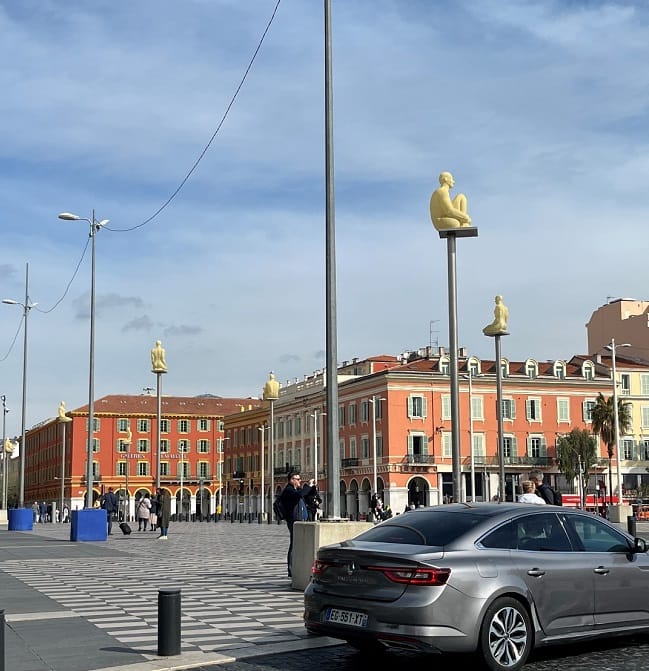
The seven Buddhists in Place Massena
One might question why a statue of Greek mythology is in France and the heart of Nice. In 350 BCE, the Greek army won a decisive battle just north of Nice. Upon their return to Greece, the warriors established a settlement in what is now Nice. Then, in 1956, Alfred Janniot erected the Sun Fountain to honor Greek history and the sun-filled climate of Nice. Apollo wears a crown of four horses, symbolizing the four chariots Apollo used to carry the sun across the sky.
At about the same time, Renault introduced a four-cylinder car, and the four horses on Apollo’s crown seemed like a car commercial to many of Nice’s citizens. Plus, neither Apollo nor the five deities wore any covering over their sculpted genitals. So, in the 1970s, they moved the sculpture to Charles Ehrmann’s stadium. Finally, in 2011, Apollo was returned to Place Massena.
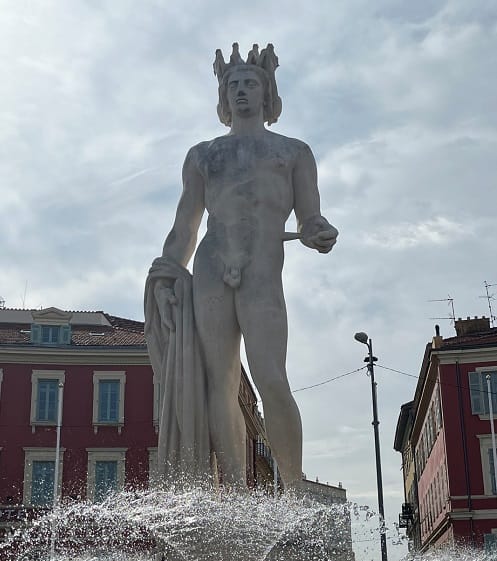
Apollo with his crown of horses
Enticing the most discrete gastronomist are the aromas percolating from the many restaurants in the old town of Nice.
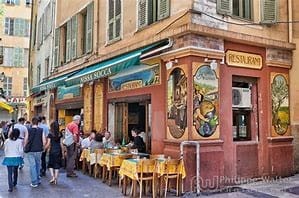
Nissa Socca Resturant in Vieux Nice ( Old town)
Just a short distance from the old town is the home of Henri Matisse, known for his sculpture and paintings.
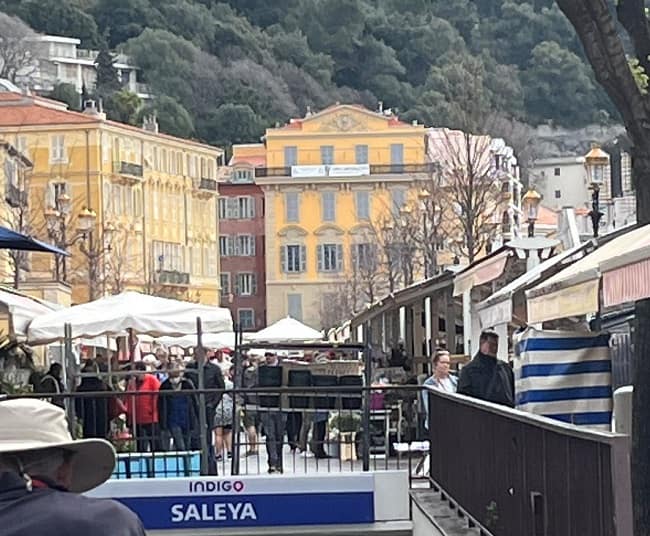
The home of Henri Matisse in the foreground (yellow building)
We visited the Matisse museum, a city museum devoted to the works of this great artist.
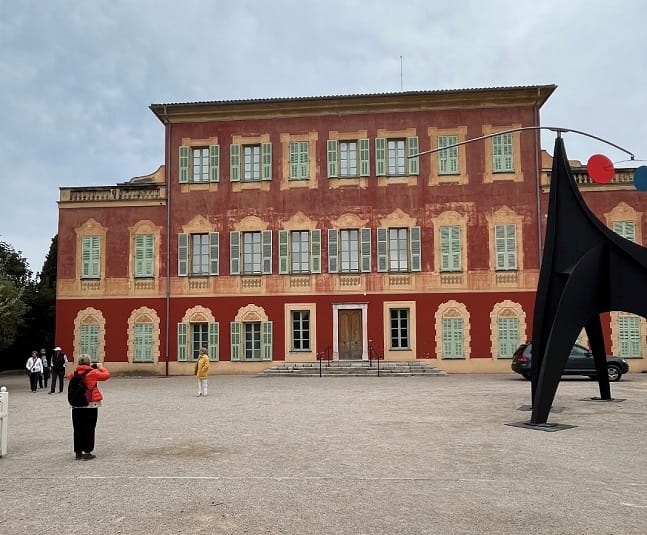
The Matisse Museum in Nice
On our way back to the tour bus, we stopped to watch a game of boules, known as pétanque, perhaps the sport closest to French hearts. Like British lawn bowling or Italian bocce, they traditionally played the French version with metallic balls on a dirt surface beneath plane trees, with a glass of pastis at hand.
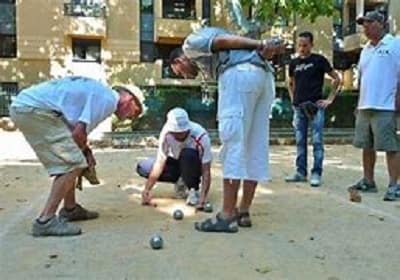
A game of Petanque, note the metal balls
After a full day of sightseeing and enjoying Nice, we returned to the cruise ship and prepared for dinner, looking forward to an adventure in Marseille, France.
A major port on the Mediterranean sea, Marseille, is the home of Petanque, the metal bocce ball game. I found Marseille to be quite windy, and in fact, our tour guide told us that the winds are constant and sometimes can hit 60 miles per hour. In winter, Marseille is subject to the dry, cold northwest wind known as the Mistral, which blows down the Rhône Valley with considerable force.
We toured the old port and the Marseille Cathedral Major.
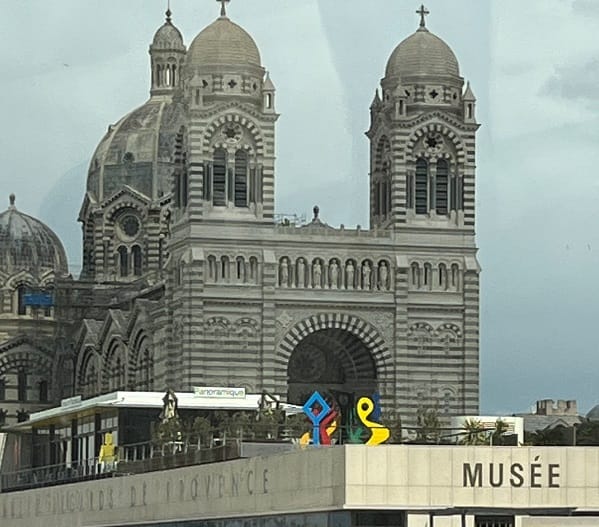
The Marseille Cathedral Major, the seat of the Archdioceses of Marseille
We went to the Norman Foster Pavillion with its mirrored ceiling, where we took a picture while standing underneath the mirror.
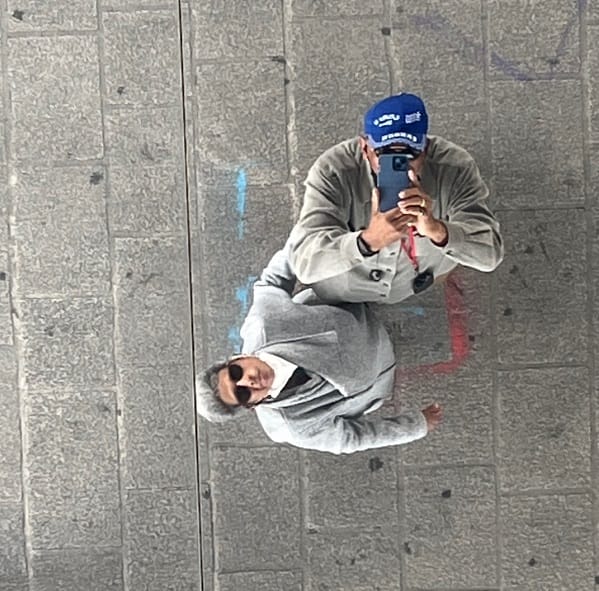
Armand and Miriam take selfies under the Norman Foster Mirror in the Pavillion.
We met our tour guide at the designated area next to a tourist shopping area. One of our travelers bought olive oil soap at one of those shops, and we wanted to do the same. Unfortunately, the tour bus was approaching, but the guide assured us we had time to make that purchase, and we did. Another fantastic day but looking forward to Barcelona, Spain, in the morning.
Barcelona
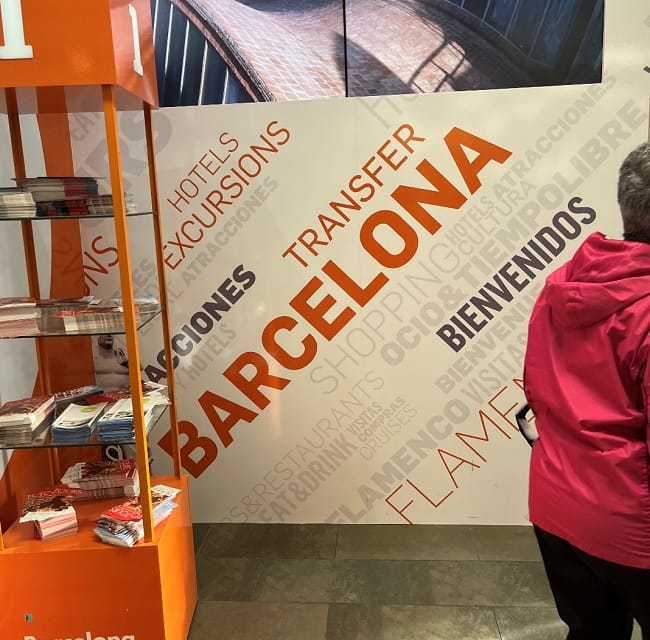
We arrived in Barcelona, Spain, at 0830 hrs., eager to tour this historically significant European jewel. Our guide was exceptionally fluent in English and poetically described Barcelona’s beauty, almost rhyming in his narrative. Starting construction in 1883, the Gaudi Building was one of the first Art Neuvo buildings worldwide.
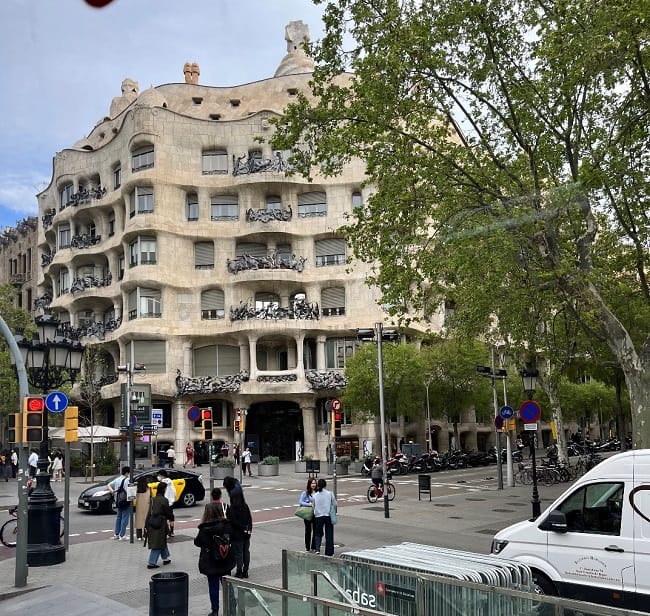
The Gaudi Building, Casa Vicens, was Gaudi’s residence
However, one of the most famous buildings in Barcelona and the world is the Basílica de la Sagrada Família. Gaudi oversaw this architectural gem as well. The construction started in 1882, but Gaudi took over as lead architect in 1883. Gaudi thought the project would be complete by 1926, but as of today and after multiple lead architects, the project is ongoing.
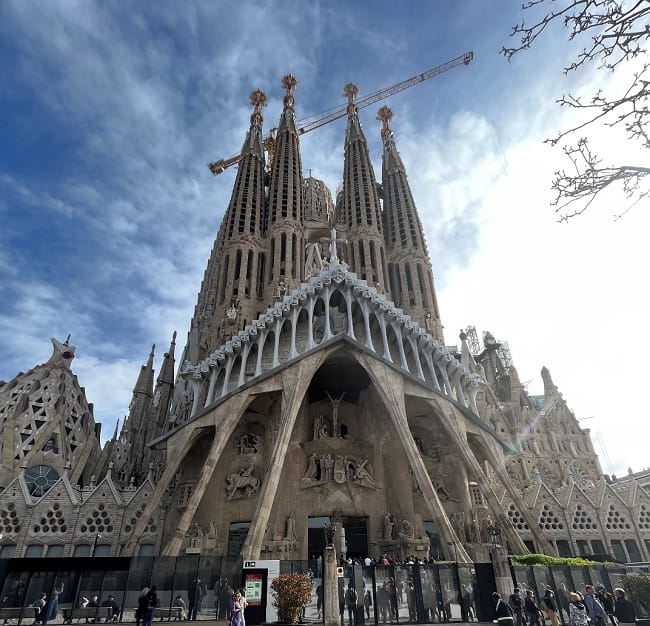
La Sagrada de Familia
Barcelona was once under Roman rule, and signs of this occupation remain.
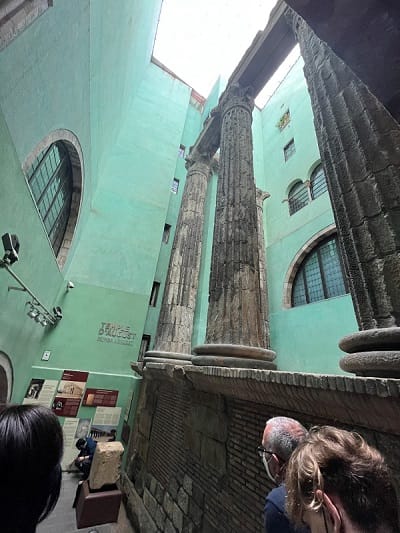
Roman Columns in Barcelona, nearly 2000 years old
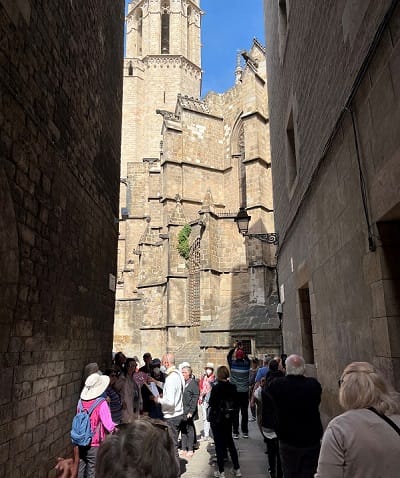
Narrow streets of the ancient area of Barcelona.
We then walked to the Cathedral of Barcelona, where flea market vendors, street musicians, and magicians showed their talents. I was fortunate to find a pair of art déco glasses I purchased for 25 euros.
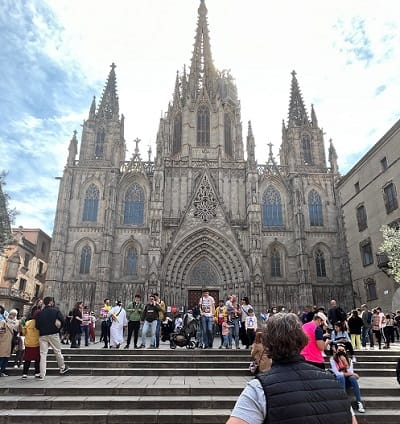
The Barcelona Cathedral
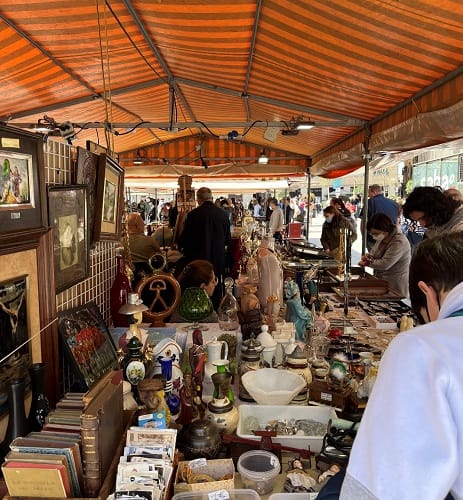
One of many flea market vendors at the plaza of the Church of Barcelona
It would be best if you visited the Roman ruins of Barcelona. Rome founded Barcelona in 1 AD, calling it Barcino. Surrounded by an ancient wall, these Roman remnants are apparent throughout Barcelona.
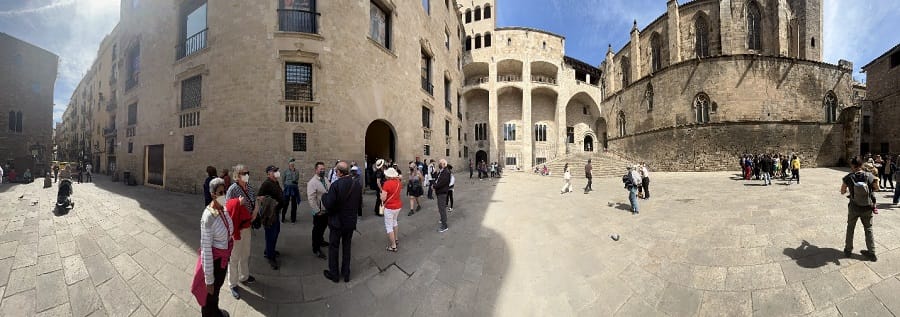
This Roman complex is now the Museum of the History of Barcelona
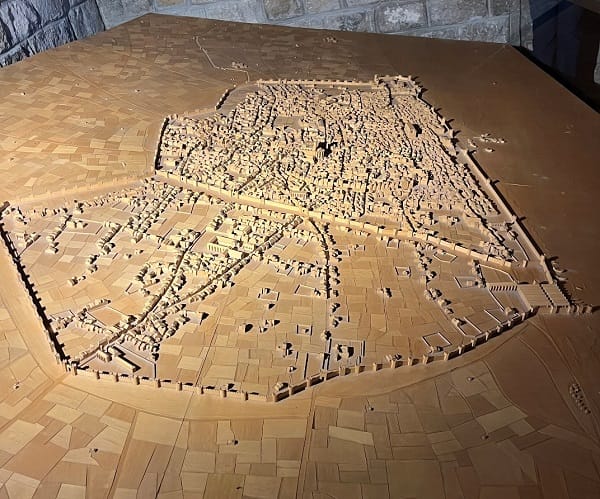
A model of the ancient Roman city of Barcino
Our cruise ended in Barcelona, and we went to the Barcelona airport for a flight to Lisbon, Portugal, where we would spend a week.