





The Zambezi is the main attraction in Zambia’s Lower Zambezi National Park. It shapes the landscape, draws wildlife to its banks, and creates a safari experience that is as much about being on the water as it is about travelling through the bush.
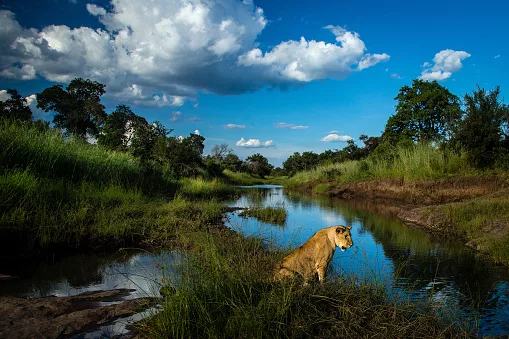
Female lion sitting by river, Lower Zambezi National Park/By: Rick Collins/Getty Images
Set against the Zambezi Escarpment, the park covers about 4,092 sq km and protects a mosaic of riverine forest, floodplains, mopane and miombo woodland and open grassland. During the dry season, wildlife gathers around the river as other water sources disappear.
A three-day visit is enough to experience the park’s different sides: drifting quietly through channels by canoe, watching elephants along the river, fishing for tigerfish, walking through the bush and learning how conservation is helping protect this important river ecosystem.
Day one: Arrive beside the Zambezi
Settle into the river rhythm
Lower Zambezi is reached most easily from Lusaka, with visitors typically flying to one of the airstrips serving the park before transferring to their lodge or camp. Road access is also possible via Chirundu.
The first afternoon should be deliberately slow.
After settling in, head towards the river rather than immediately setting off on a long game drive. The Zambezi is broad and generally calm through this section, with islands, lagoons and channels breaking up the water and the escarpment rising beyond the valley. UNESCO describes the combination of river, floodplain, woodland and escarpment as one of the defining features of the park.
Take a boat out in the late afternoon and watch the riverbanks come alive as the temperature drops.
Elephants may be feeding close to the water, while hippos remain partially submerged and crocodiles lie almost motionless along the shallows. Buffalo and waterbuck are also regularly seen around the river, while fish eagles provide one of the area’s characteristic calls.
End the day on the water
A sunset cruise is a fitting introduction to Lower Zambezi.
Rather than ticking off wildlife sightings, pay attention to the relationship between the animals and the river. The same water that provides drinking sites for elephants and wallowing pools for hippos also supports fish, birds, crocodiles and the vegetation lining the floodplain.
The result is a safari landscape where the river never feels like background scenery. It is the thread holding the ecosystem together.
Day two: Explore Lower Zambezi by canoe
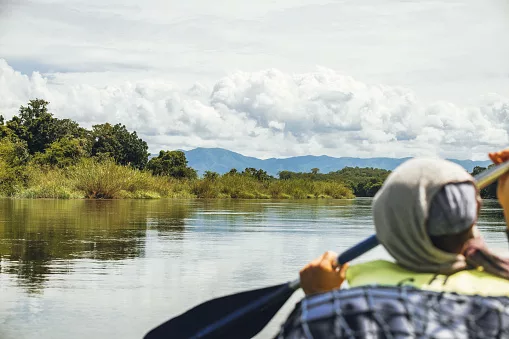
Canoeing on the Zambezi River in Zambia/By: golero/Getty Images
Start with a canoe safari
Wake early and take to the water before the heat builds.
Canoeing is one of Lower Zambezi’s defining experiences, with guided trips following the channels between the river’s islands. The current can carry boats downstream, allowing visitors to move quietly through the landscape with relatively little disturbance.
From a canoe, the perspective changes.
There is no vehicle between you and the river. Hippos can be seen in the water, elephants browse along the banks and antelope appear between the trees. The quieter approach also makes it easier to concentrate on smaller details, from waterbirds and tracks in the mud to insects moving across the surface.
The Zambezi Tourism site notes that canoe trips can follow remote channels between islands, where wildlife sightings can include hippo, elephant, zebra, puku, impala, buffalo, kudu and baboons.
Look beyond the big animals
Lower Zambezi is about more than its elephants.
The park’s varied habitats support a wide range of wildlife, including lion, leopard, African wild dog and cheetah, while the river itself supports a rich aquatic ecosystem. UNESCO’s 2026 tentative World Heritage submission records close to 50 fish species in the Zambezi within the park.
Birders should also keep watch for fish eagles, kingfishers and colourful riverbank species. Zambia Tourism specifically highlights the scarlet carmine bee-eaters that can be seen nesting in the riverbanks.
The slower pace of canoeing makes it easier to appreciate this biodiversity without constantly searching for the next large mammal.
Spend the afternoon fishing
Fishing gives the afternoon a completely different rhythm.
Lower Zambezi is known for tigerfish, while bream and vundu are among the other species found in the river. Fishing is generally offered as a guided activity through safari operators, with tackle provided by participating lodges.
Tigerfish are particularly prized by anglers, but the experience is also about spending time on the Zambezi and understanding the river as a living system rather than simply a scenic backdrop.
Sustainable fishing and the health of fish stocks are increasingly important conservation considerations. UNESCO’s 2026 assessment notes concerns around fish stocks and exploitation, reinforcing the need for careful management of the river’s aquatic resources.
Watch the river change at sunset
Return to the water in the late afternoon, when the heat begins to fade.
The Zambezi takes on another character as the sun drops behind the escarpment. Elephants move towards the river, hippos become more active, and birds cross the channels between the islands.
It is a fitting end to a day spent almost entirely around water.
Day three: Walk the wilderness
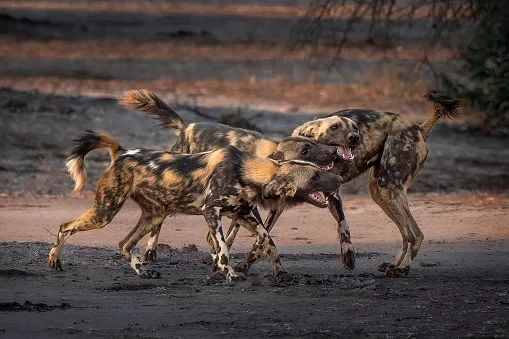
African wild dogs at Lower Zambezi National Park/By: Michael J. Cohen, Photographer/Getty Images
Trade the canoe for the bush
On the final morning, leave the river behind and explore Lower Zambezi on foot with a qualified guide.
Walking changes the scale of a safari. Instead of concentrating on distant animals, you begin noticing tracks, dung, insects, plants and calls. A guide can explain how animals move between the river and woodland, which plants provide food and how seasonal changes influence wildlife behaviour.
This is also where Lower Zambezi’s varied habitats become more apparent.
The park extends from the river and its floodplains into woodland and towards the escarpment. UNESCO identifies riverine and alluvial forests, mopane and miombo woodland, savannah grasslands and escarpment habitats among the area’s major vegetation types.
Understand why the river matters
The Zambezi is one of Africa’s major rivers and a transboundary waterway supporting ecosystems and communities across several countries.
Within Lower Zambezi National Park, it provides a dry-season refuge for wildlife. As temporary water sources disappear, animals increasingly concentrate around the valley floor and river, creating one of the park’s most important ecological cycles.
That seasonal movement is part of what makes a dry-season safari so rewarding, but it also demonstrates why protecting the river is essential.
The park’s conservation story extends beyond its boundaries. Across the Zambezi in Zimbabwe lies Mana Pools National Park and its associated safari areas, forming part of the same broader Middle Zambezi ecosystem. UNESCO recognises the ecological connection between Mana Pools and Lower Zambezi, while cooperation between Zambia and Zimbabwe is strengthening transboundary conservation.
Leave with a bigger picture
Lower Zambezi has the wildlife expected of a major African safari destination, but its strongest appeal is the way those sightings are experienced.
An elephant crossing a riverbank, a hippo surfacing beside a canoe or a fish eagle calling over the water all make more sense when the river is understood as the centre of the ecosystem.
That is also why conservation here cannot be separated from tourism.
Lower Zambezi was added to Zambia’s UNESCO World Heritage tentative list in 2026 because of its biodiversity, ecological processes and exceptional riverine landscape. The submission highlights its importance for species including elephant, African wild dog, leopard and cheetah, while also identifying pressures including poaching, changes to the river’s hydrology and concerns around fish stocks.
When to go to Lower Zambezi
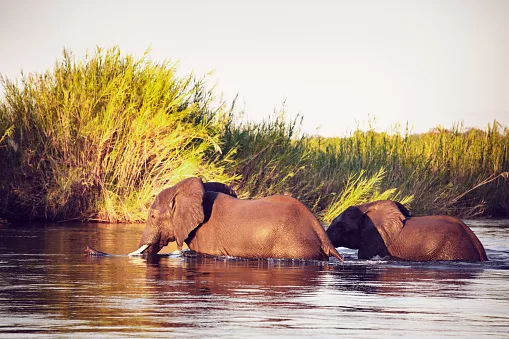
African Wild Elephants at Zambezi National Park/By: GCShutter/Getty Images
Visit between July and October
The strongest period for a Lower Zambezi safari is generally July to October, when the dry season concentrates wildlife around remaining water sources.
Zambia Tourism recommends mid-season, from July to October, while noting that most lodges and canoeing operators operate from roughly April to November. Fishing is considered particularly good during September and October.
April to June can be greener, but thicker vegetation and longer grass can make wildlife harder to spot.
Getting to Lower Zambezi
From Lusaka
The easiest option is to fly from Lusaka to an airstrip serving the park, with transfers arranged by the lodge or safari operator.
Driving is another option, particularly via Chirundu, although some routes require a 4×4. Operators can also arrange access from Chirundu and, in some cases, from across the border in Zimbabwe.
Because activities such as canoeing, fishing, boating and walking are generally organised through safari camps and lodges, it is worth choosing accommodation based on the experiences you want rather than simply its location.
A different kind of Zambian safari
Lower Zambezi does not need to compete with Victoria Falls or South Luangwa on their terms. Its appeal is quieter.
Here, the safari unfolds between water and wilderness: a canoe sliding through a narrow channel, an elephant drinking at the river’s edge, a tigerfish striking beneath the surface, footprints discovered during a morning walk and the sound of a fish eagle carrying across the valley.
Follow us on social media for more travel news, inspiration, and guides. You can also tag us to be featured.
Instagram | Facebook | Twitter | Spotify
ALSO READ:
South Africa’s natural wonders, from ancient mountains to wild coastlines
The post 72 hours in Zambia’s Lower Zambezi appeared first on Getaway Magazine.