





Africa’s islands are remarkably diverse. Some are steeped in centuries of Swahili trading history, others blend French and Creole influences, while one is home to wildlife found nowhere else on Earth.
You can hike an active volcano, wander medieval streets where donkeys outnumber cars, snorkel in a freshwater lake or unwind in a luxury resort, all without leaving the continent.
If you’re wondering which island best matches your travel style, here’s what makes seven of Africa’s most distinctive islands so wonderfully different.
Zanzibar, Tanzania: For culture with a beach holiday
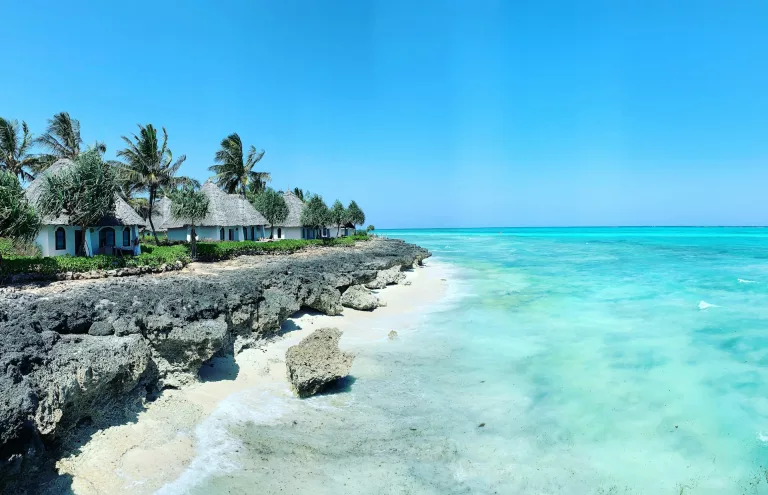
Unguja, Zanzibar/Med J/Unsplash
Where history meets the Indian Ocean
Zanzibar effortlessly combines white-sand beaches with one of East Africa’s richest cultural histories. For centuries, the island was a crossroads for traders from Arabia, Persia, India and mainland Africa, shaping the Swahili culture visitors experience today.
A stroll through the winding alleyways of Stone Town reveals carved wooden doors, bustling markets, spice shops and historic buildings that tell stories of the island’s past. Beyond the town, spice plantations, dhow cruises and coral reefs offer plenty to discover.
Zanzibar is ideal for travellers who want more than just a beach holiday. You can spend the morning exploring history and the afternoon swimming in warm Indian Ocean waters.
Lamu, Kenya: For slowing down

Lamu Town, Kenya/Stanislav Lvovsky/Unsplash
Life moves at the pace of a donkey
Just off Kenya’s northern coast lies Lamu, where modern life seems to have taken a different path. There are no cars in the historic town—people travel on foot, by donkey or aboard traditional wooden dhows.
Its narrow streets, coral-stone buildings and centuries-old Swahili architecture have changed remarkably little over time, giving the island an atmosphere unlike anywhere else in East Africa.
Rather than packing every day with activities, Lamu encourages visitors to embrace slower travel. Long lunches, sunset dhow cruises and quiet walks through Shela Village become the highlights of the trip.
Mauritius: For effortless luxury
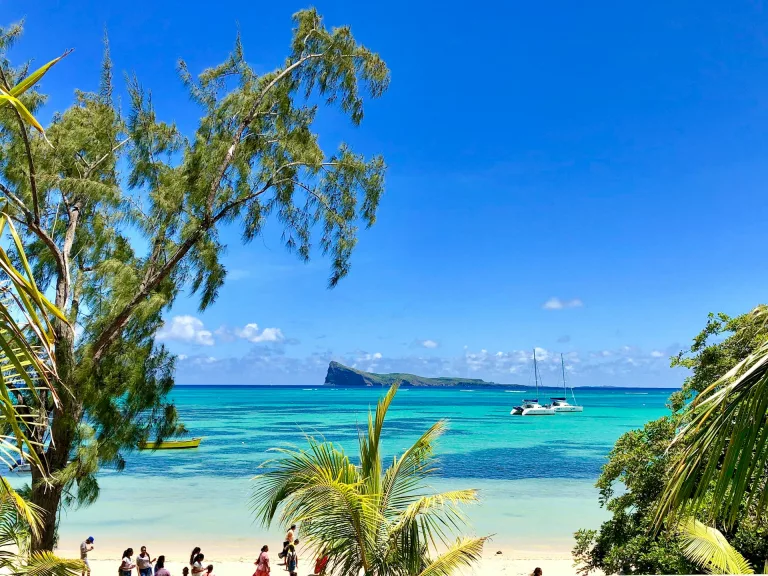
Bain Boeuf Public Beach, Grand Baie, Mauritius/Dan Dy/Unsplash
More than honeymoon territory
Mauritius has earned its reputation as one of Africa’s premier island destinations, but it offers far more than luxury resorts.
Its multicultural population—descended from Indian, African, Chinese and European communities—has created one of the continent’s most exciting food scenes. Alongside beach days, visitors can hike volcanic peaks, visit botanical gardens, explore colourful temples or sample Creole cuisine.
Families appreciate the calm lagoons protected by coral reefs, while couples are drawn to its polished hospitality and romantic settings. It strikes a balance between adventure and relaxation that’s hard to beat.
ALSO READ:
7 South African destinations that are perfect for travelling with toddlers
Réunion: For outdoor adventure
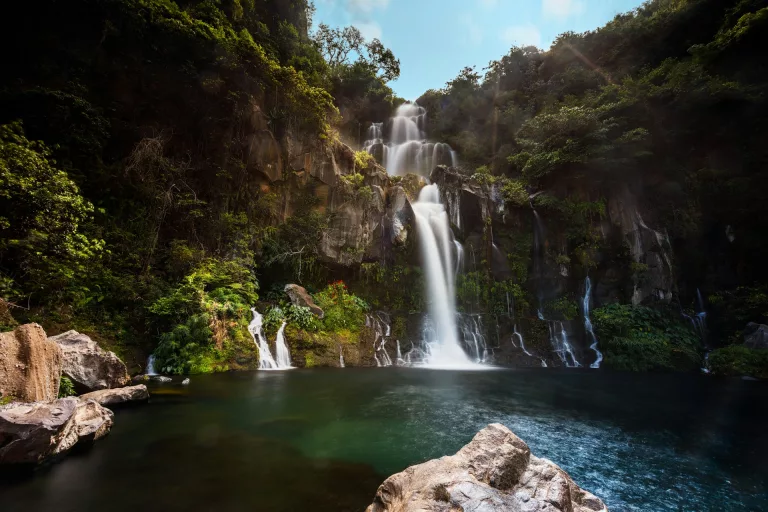
Bassin des Aigrettes, Réunion/Fabien Bellanger/Unsplash
An island built for hikers
Neighbouring Mauritius may steal the spotlight, but Réunion is arguably the Indian Ocean’s adventure capital.
As an overseas department of France, the island combines European infrastructure with spectacular volcanic scenery. Towering mountains, dramatic cirques, waterfalls and one of the world’s most active volcanoes create endless opportunities for hiking, canyoning and trail running.
The beaches are beautiful, but they’re rarely the main attraction. Visitors come here to spend their days outdoors before enjoying French-Creole cuisine in the evenings.
For active travellers, Réunion delivers experiences unlike any other African island.
Madagascar: For wildlife found nowhere else
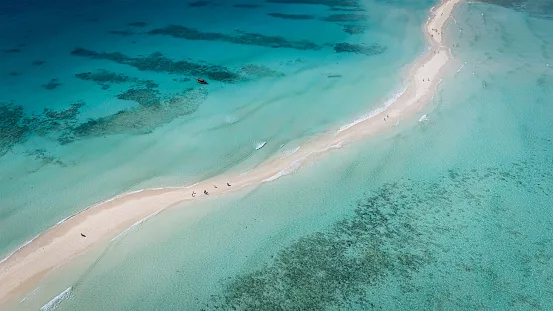
Aerial View of Nosy Iranja, Madagascar/By: © Cyrielle Beaubois/Getty Images
Nature wrote its own rules here
Separated from mainland Africa for around 88 million years, Madagascar evolved in remarkable isolation.
Around 90% of its wildlife is found nowhere else on Earth, from playful lemurs and colourful chameleons to towering baobab trees and extraordinary plant species.
The island’s uniqueness extends beyond its wildlife. Malagasy culture reflects both African and Austronesian roots, making it culturally distinct from the rest of the continent.
Madagascar rewards curious travellers willing to venture beyond the beaches in search of rainforests, national parks and extraordinary biodiversity.
Príncipe, São Tomé and Príncipe: For escaping the crowds

São Tomé and Príncipe/João Ferreira/Unsplash
Small island, big tranquillity
Príncipe remains one of Africa’s least-visited island destinations, and that’s precisely its appeal.
Dense rainforests stretch to quiet beaches where visitors may find themselves almost alone. Boutique eco-lodges blend into the landscape, while conservation projects protect rare birds, turtles and marine life.
Rather than nightlife and shopping, the island offers birdwatching, rainforest walks, cocoa plantations and peaceful afternoons listening to waves roll onto the shore.
If your ideal holiday involves switching off completely, Príncipe is difficult to rival.
Likoma Island, Malawi: For a freshwater island escape
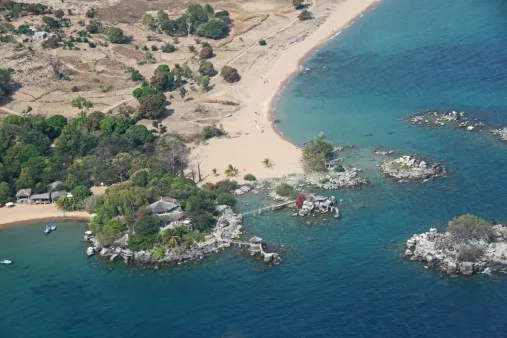
Likoma island, Lake Malawi, Malawi/By: Romina Facchi/Getty Images
An island unlike any other
Not every island paradise sits in the ocean.
Likoma Island lies within the vast expanse of Lake Malawi, where clear freshwater replaces saltwater but the beaches are just as inviting.
Visitors spend their days kayaking, snorkelling among colourful cichlid fish, swimming in remarkably clear water or exploring quiet fishing villages. The island’s relaxed atmosphere makes it easy to lose track of time, while the impressive St Peter’s Cathedral offers a surprising glimpse into its missionary history.
For travellers looking for something different, Likoma proves that Africa’s inland waters can rival its coastline.
Which island suits your travel style?
Each island tells a different story, shaped by geography, history and the people who have called it home for centuries.
Choose Zanzibar if you want a blend of history, culture and beaches. Head to Lamu for an authentic Swahili escape where life unfolds at a gentler pace. Mauritius delivers polished luxury with something for every traveller, while Réunion rewards hikers and outdoor enthusiasts with dramatic volcanic landscapes.
If wildlife is your priority, Madagascar stands in a league of its own. Príncipe offers peaceful seclusion for those wanting to disconnect, while Likoma Island reminds travellers that unforgettable island experiences aren’t limited to the ocean.
Follow us on social media for more travel news, inspiration, and guides. You can also tag us to be featured.
Instagram | Facebook | Twitter | Spotify
ALSO READ:
7 African destinations where craftsmanship is the attraction
The post What makes African islands so different from one another? appeared first on Getaway Magazine.