





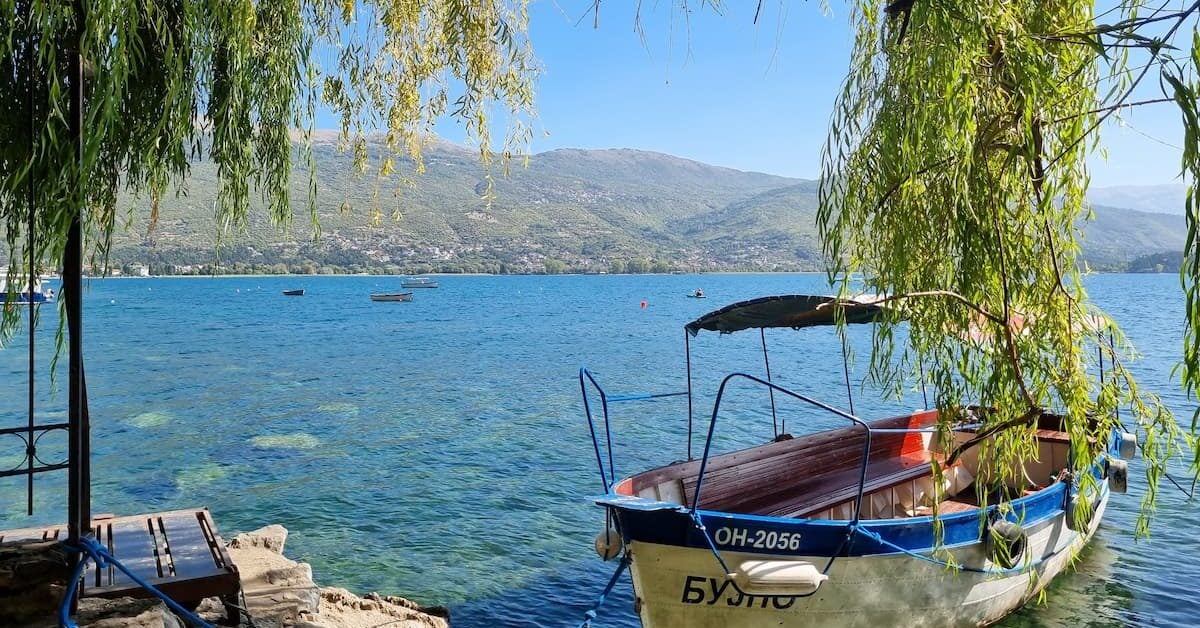
The first response most people have when asked about North Macedonia is, where’s that?
Usually followed with, why go there?
North Macedonia is one of the more forgotten Balkan countries, wedged between Albania and Bulgaria on either side, with Serbia above and Greece below. Like most of the countries here, it was ruled by the Ottomans for over 500 years, and its culture is a potent mix of Asia and Europe.
It’s one major headline was in 2018, when, after a longstanding feud with Greece, the country changed its name from Macedonia to North Macedonia- the ‘real’ Macedonia being part of Greece. Unfortunately this did not resolve the ongoing debate between the two countries over who owns Alexander the Great, and so the giant statue of him in the centre of Skopje is know as ‘Man on Horseback’.
The Capital City, Skopje
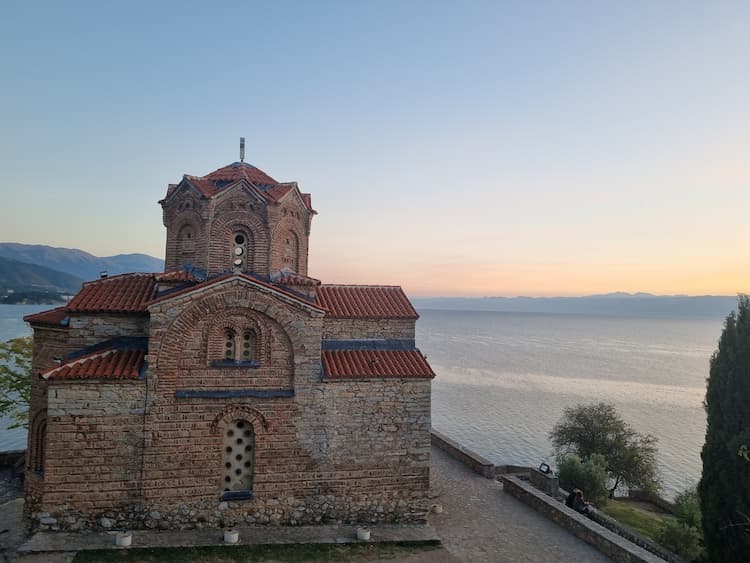
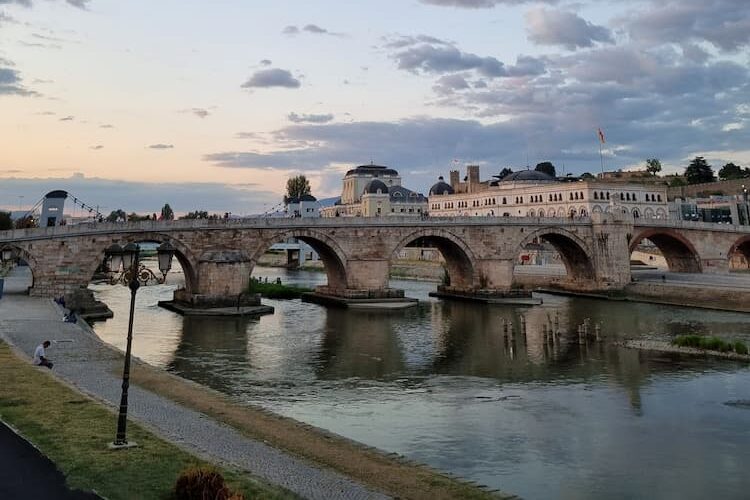
The capital city, Skopje, is a relatively normal city; except for its movie-set centre, complete with giant statues, elegant bridges and towering marble façades. It’s designed to look like it was built by the ancient Greeks- but in fact was built under a nationalistic government in 2014.
The work was plagued with corruption scandals, and some of the buildings already have mould and cracks growing from cheap materials.
Many travellers complain that Skopje is boring, but they’re comparing the city to Paris or London. Skopje is fun because it’s not like Western Europe- it’s chaotic and messy and beautiful and ugly all at the same time. You can spend half a day wandering the old Turkish bazaar, drinking tea and scoffing baklava.
Skopje is actually the birthplace of Mother Teresa- you can visit a free museum about her life and work in the centre. Or you can climb the abandoned fortress in the centre of the city, and watch the comings and goings of its inhabitants from the sky. At night, the streets are busy with tourists and locals, and the Millennium Cross glows over the city like a Hollywood sign.
Read More: Skopje, North Macedonia: Where Ancient History Meets Modern Charm
Matka Canyon
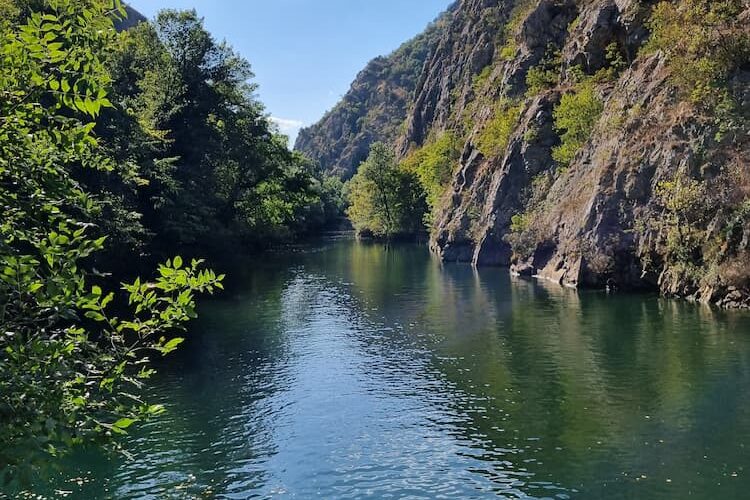
The highlight of Skopje is Matka Canyon, an hour outside the city. Mountains intersect with a gorgeous kilometre-long lake that runs the length of the canyon, and tourists can take a boat downstream to an underwater cave.
A monastery perches on one side of the mountains, with churches and crosses dotting the other. Tourists can climb the slopes for a stunning view across the gorge, with tracks winding up the steep cliffs for a glimpse of a cross or a closer look at an old, forgotten church.
For those looking for a gentler path, you take a stroll along the river, browse the beads and necklaces for sale at the tiny stall and try roasted corn and ice cream from street vendors. Although the lake is actually artificial, the water is so clear and blue that you can forgive the oversight.
Lake Ohrid
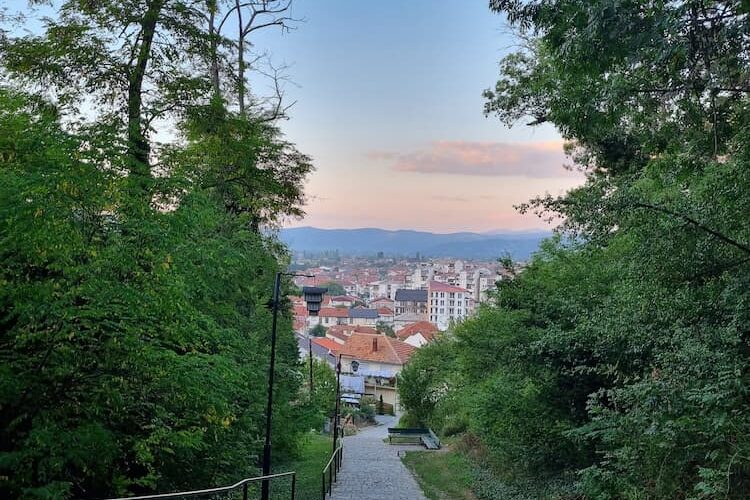
The crowning jewel of North Macedonia’s tourism industry is Lake Ohrid, an enormous blue waterhole three hours south of Skopje. The deepest lake in the Balkans, and one of the largest in Europe, it’s ringed with Byzantine monasteries and churches.
In October, most of the tourists have left, and the town has relaxed into a lazy autumn. You can swim at the little beach, sip coffee and cocktails on the waterfront and take a (steep) wander through the gorgeous old town.
The beautiful Saint-Naum Monastery is an hour-and-a-half boat ride across the lake, and you can even stop off at the mysterious Bay of Bones, a series of water-borne huts built in imitation of the ancients.
With stunning countryside, ancient and modern history, a Mediterranean climate and cheap prices, for those interested in exploring this secret of the Balkans, the question should not be why, but why not.
If You Go:
Getting There: International flights land at Skopje’s Alexander the Great Airport. Search and compare fares at CheapOair.
Getting Around: Public buses run reliably from Skopje to Lake Ohrid and most other destinations. Local buses also connect central Skopje to Matka Canyon. If you’d prefer to rent a car and explore at your own pace, compare rates at Discover Cars. Note: secondary and mountain roads can be poorly lit and maintained — drive with care.
Accommodation: Search hotels in Skopje on TripAdvisor.
Money: Most smaller restaurants and markets are cash-only. Withdraw local currency (Macedonian denar) on arrival — some ATMs offer fee-free withdrawals, so check with your bank before you go.
eSIM: Stay connected throughout your trip with an Airalo eSIM for North Macedonia — our go-to for reliable data without roaming charges.
Travel Insurance: North Macedonia’s outdoor activities — canyon hiking, lake excursions, mountain roads — make travel insurance worth having. Compare plans at Squaremouth or SafetyWing.
Getting to Other Balkans Destinations: Most travelers pair North Macedonia with neighboring countries. Bus connections to Albania, Kosovo, Serbia, and beyond are available through Getbybus.
Practical Tips:
- Don’t skip rakia, the national spirit — consider yourself warned.
- Locals are famously welcoming and happy to share opinions on everything from restaurants to politics.
- Register with local police within 48 hours of arrival if not staying in a hotel (hotels handle this automatically).
Need a hand planning your trip? Here are the sites and services we rely on most, from booking tools to travel products we love.
Inspire your next adventure with our articles below:
Author Bio: Lucy is a twenty-something Australian who is deeply passionate about exploring, adventuring, and everything in between. With a degree in communications and international studies, she has dedicated time to working in print and radio. Her interests include hiking, reading, and persuading her friends to accompany her on travels.
Want to discover more hidden gems and helpful travel tips? Join our free newsletter for the latest travel secrets and travel articles.
We are reader-supported and may earn a commission on purchases made through links in this article.
Originally published as Europe’s Most Overlooked Country Has a Fake Greek City, a Spectacular Canyon and One of the World’s Oldest Lakes on GoWorldTravel.com