






In an era where time is of the essence and environmental concerns are at the forefront, the potential for high-speed rail (HSR) to revolutionize domestic travel in the United States is an inviting prospect. With the current state of air travel characterized by long security lines, flight delays, and environmental repercussions, high-speed rail presents an appealing alternative. However, while the benefits are evident, the pathway toward widespread adoption of HSR in the U.S. faces numerous obstacles.
First, one of the primary challenges lies in the sheer scale of infrastructure development required to establish a comprehensive high-speed rail network. Unlike countries in Europe and Asia where HSR has thrived, the U.S. faces significant geographical and logistical hurdles. The vast expanse of the country necessitates extensive construction, including tunnels, bridges, and track networks, which would require substantial investment and coordination between federal, state, and local governments.
Moreover, the existing transportation landscape dominated by automobiles and airplanes poses a formidable barrier to the adoption of high-speed rail. Americans are accustomed to the convenience and flexibility of personal vehicles, while air travel has long been synonymous with long-distance journeys. Convincing travelers to shift their preferences towards rail travel would require a concerted effort to highlight the advantages of HSR, such as faster point-to-point travel times, reduced carbon emissions, and enhanced comfort.
Furthermore, the political and regulatory environment presents another layer of complexity. HSR projects often face opposition from various stakeholders, including environmental groups, landowners, and competing transportation interests. Navigating the regulatory landscape, acquiring rights-of-way, and securing funding amidst competing priorities pose formidable challenges for proponents of high-speed rail.
In addition, the issue of funding looms large over the feasibility of HSR in the U.S. While the Biden administration has signaled support for infrastructure investment, securing the necessary funding to finance HSR projects remains a significant obstacle. Public-private partnerships, federal grants, and innovative financing mechanisms may offer potential solutions, but sustained political will and financial commitment are essential to overcoming this barrier.
Finally, the cultural shift required to embrace high-speed rail cannot be underestimated. In a society where air travel is often associated with status and prestige, convincing travelers to embrace rail as a viable alternative requires a shift in mindset. Public education campaigns highlighting the benefits of HSR, coupled with incentives such as improved connectivity and affordability, are crucial in fostering widespread acceptance and adoption.
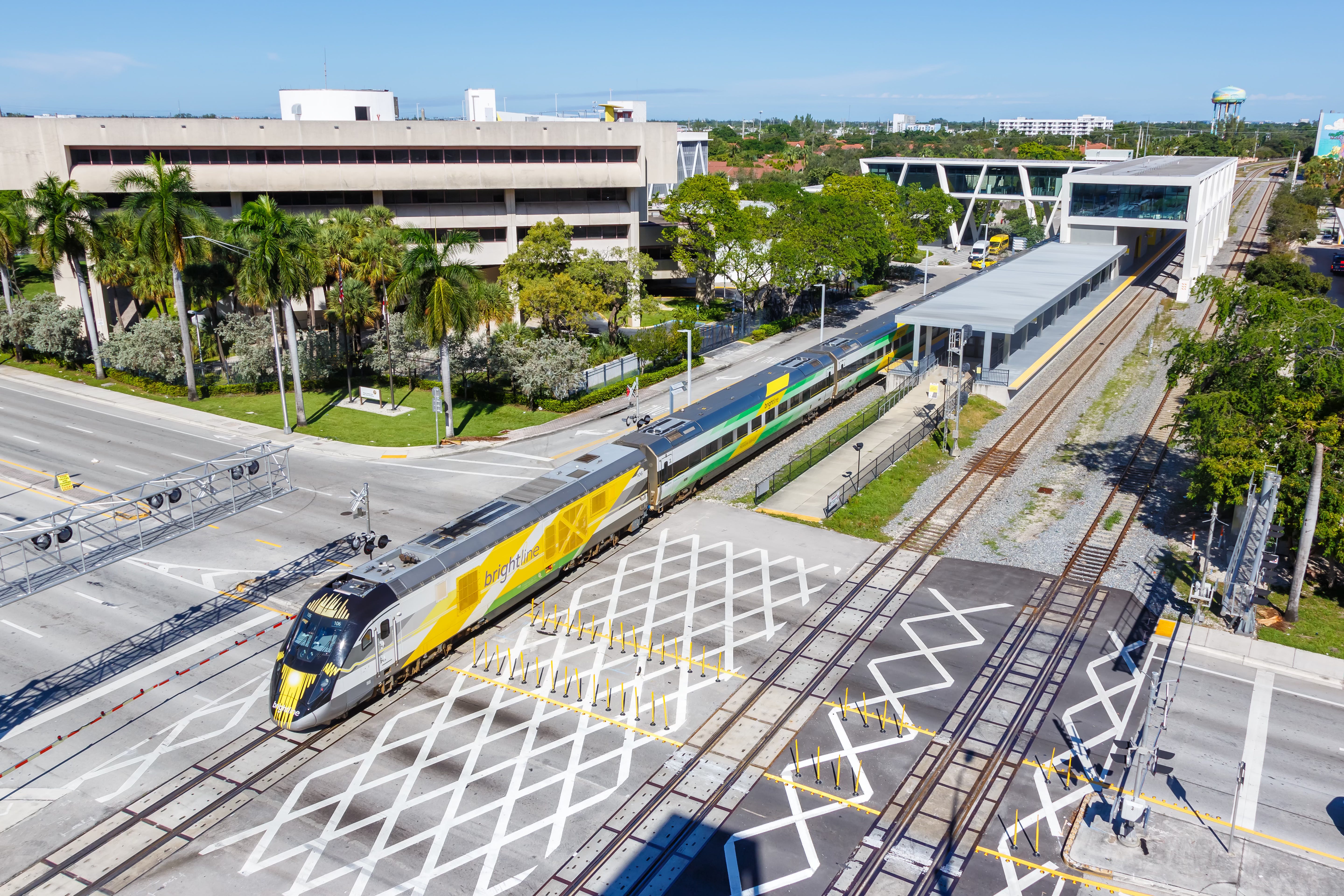
Despite these obstacles, the potential benefits of high-speed rail in the U.S. are substantial and one company that is accepting the challenge is Brightline. The Fortress Investment Group-owned company is the only provider of modern, eco-friendly, higher-speed rail service in America. Currently, Brightline operates between Miami and Orlando, with a Southern California (Rancho Cucamonga) to Las Vegas service which will run at speeds up to 200 miles per hour. Brightline West, which broke ground earlier this year and hopes to be open by 2028, just before the Los Angeles Summer Olympic Games.
The other project that’s in the works is California’s high-speed rail train that would connect Los Angeles and San Francisco. However, unlike Brightline’s efforts, California’s venture has been plagued with problems from its inception. Funding estimates were overly optimistic, the initiative began before design, establishment of right of ways, and other pre-construction tasks were completed. With only a small segment of the line scheduled to open before 2030, all bets are off as to the completion of the system.
Even with the problems being experienced by the California High-Speed Rail Authority, Beyond providing a more efficient and sustainable mode of transportation, HSR has the potential to stimulate economic development, alleviate congestion on highways and at airports, and enhance connectivity between urban centers and rural communities. Moreover, as the global push for climate action intensifies, investing in high-speed rail represents a tangible step towards reducing carbon emissions and mitigating the impacts of climate change.
While high-speed rail holds great promise for revolutionizing domestic travel in the United States, the journey towards its widespread adoption will not be smooth. From the challenges of infrastructure development and funding to cultural shifts and regulatory hurdles, realizing the full potential of HSR requires a concerted effort from policymakers, stakeholders, and the public alike. However, in the end, high-speed rail has the potential to transform the way Americans travel, ushering in a new era of efficiency, connectivity, and environmental stewardship.