





After a magnificent 13-day cruise on the Viking Sky, we flew from Barcelona, Spain, to Lisbon, Portugal. We arrived at Lisbon’s Humberto Delgado airport and went to baggage claim rather than immigration /customs because we arrived from another E.U. country. There are no border controls between E.U. countries.
The weather was fantastic, cool, dry, and calm; in the upper 60s, “sweater weather.” But, later that week, it would warm up to the mid to high 70s.
After picking up our bags, we called our friend in Lisbon. He advised us to take an ‘Uber.’ But unfortunately, unlike our airport in the U.S., Uber, and other transportation companies have a separate lot for pickups.
The Uber pickup was across from the Terminal 1 exit, so we made our way there and found our Uber. When we reached Rua de Prata 80, our old friend stood in the doorway, waiting to help us with our bags. It was after 10 PM, and we thought we were in for the night, but there were other plans.
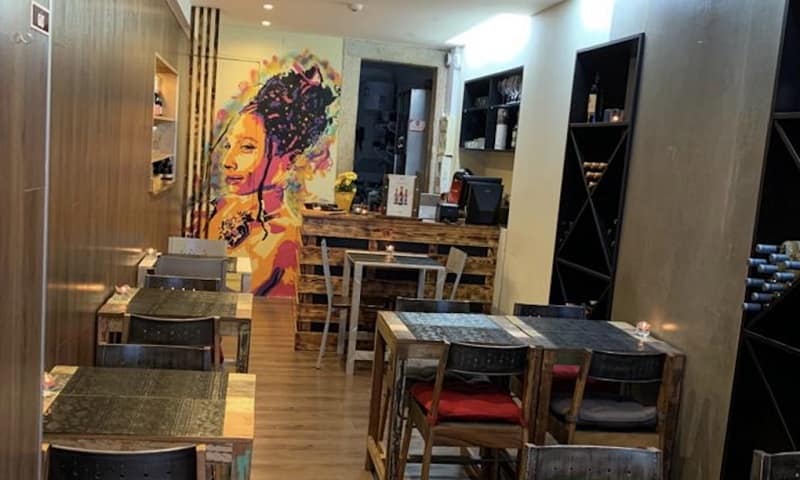
We took an Uber to Sofia’s Place, at 67 Rua de São Bento in Lisbon, and when we arrived, Ana Sofia Lopes, the owner, greeted us as if we were family. Sofia says, “we want people to feel right at home,” and we did. Ana Sofia is Cape Verdian but has traveled the world.
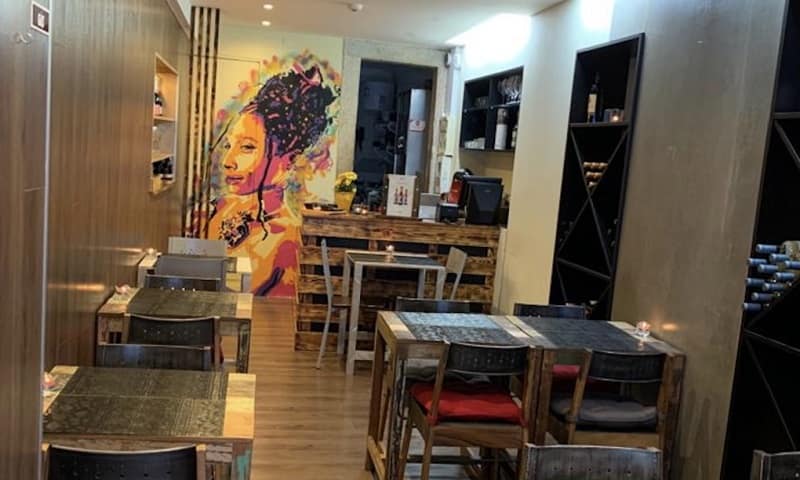
Sofia greeted us with open arms as we smiled at the life-size painting of Sofia and the great selection of Portuguese wines
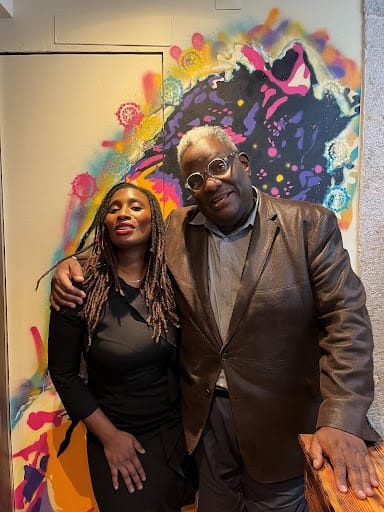
Ana Sofia Lopes with Toby Tompkins at Sofia’s Place in Portugal
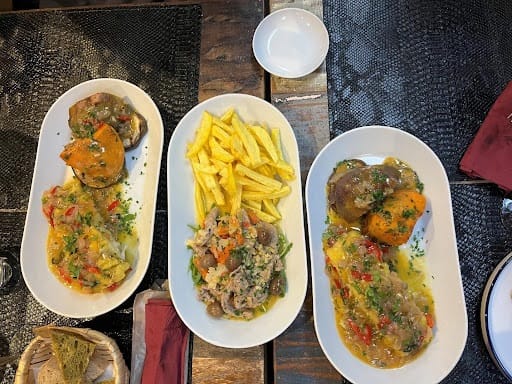
Codfish Sofia Style drizzled with spicy coconut milk served with french fries or sweet potatoes
When Sofia discovered we were from New Orleans, she invited us back for a special creole meal, Cape Verdian style.
There are six neighborhoods in Lisbon, Baixa, Chaido, Bairro Alto, Alfama, and Belém. We were able to visit all but Bairro Alto. Our friend lives in the Baixa neighborhood, the most central neighborhood in Lisbon. It’s a neighborhood with beautiful fountains, small parks, restaurants, shops, and the most beautiful plazas in Lisbon.
Baxia has a walkable score of 100. The next day, we walked from the apartment to Avenue Libertad and sat at an outdoor expresso bar for coffee and pastries.
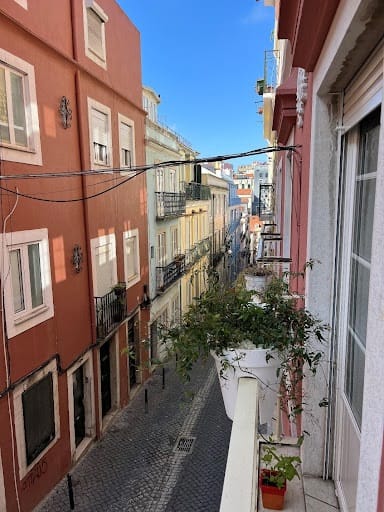
Narrow Cobble stone streets on Rua de Prada 80 in the Baxia neighborhood
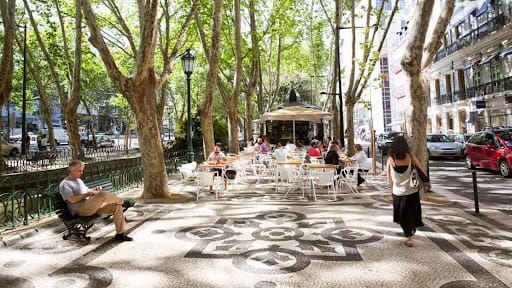
One of many Outdoor Expresso bars on Avenue Libertidad if the Baxia neighborhood
After our wake-up coffee and pastries, we went to the Brooklyn restaurant for a real breakfast.
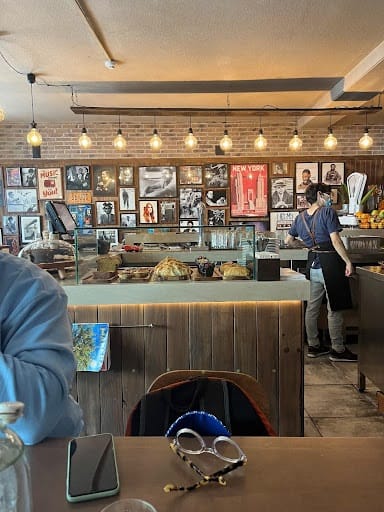
Breakfast is an excellent way to start your day at the Brooklyn Restaurant
The “Brooklyn Restuarant” is a quaint establishment patterned after a neighborhood in New York. The Brooklyn is on Praca de Alegeia and is an excellent place for an American-style breakfast or a taste of soul food. Brooklyn opens at 9:00 AM, Tuesday through Sunday.
I ordered the Brooklyn special, with coffee, freshly squeezed orange juice, a variety of bread, ham, and cheese, scrambled eggs, smoked salmon, and a pancake! If you want a hearty, wholesome breakfast, you needn’t look further!
Across the street from the Brooklyn Restaurant is a small park where a flea market takes form on Sundays. In the center of that park is a fountain, inviting you to sit and read while enjoying the relaxing sounds of the water.
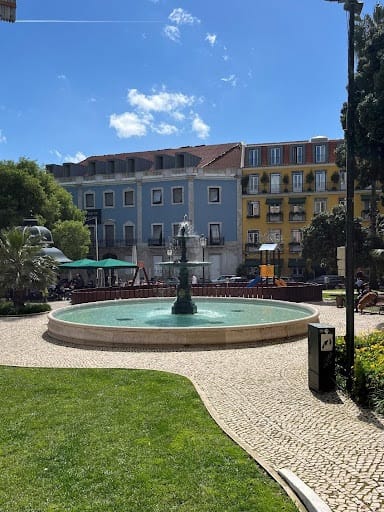
Park across the street from Brooklyn restaurant, where a flea market opens on Sundays
After breakfast, we took an Uber to the district of Belem, Lisbon. Belem is famous for its Museums. We visited the Para Religious Museum and found a tour guide who spoke English but was also entertaining in her approach to museum study.
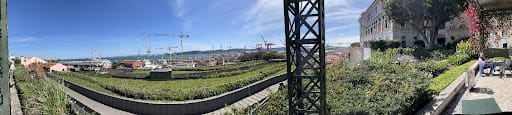
Panoramic view of the Tagus river behind the Religious Art Museum in Belem and to the right the patio where you can eat a meal served by the Museum
The most engaging work of religious art I saw was a sculpture of a pregnant Mother Mary. I have never seen Mother Mary depicted in this way. This Museum has a unique collection of sculptures, not all religious but intricate and never seen in any other museum.
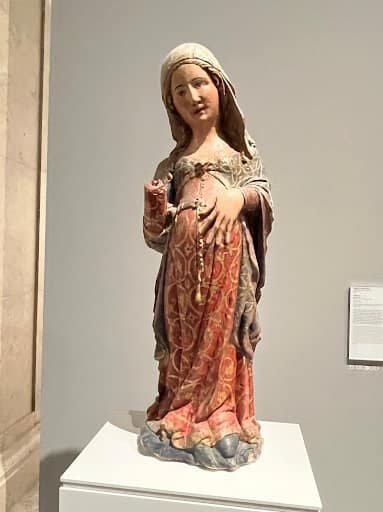
Sculpture of Pregnant Mother Mary
Across the street from the Museum, we found an antique red phone booth with a functioning push-button phone!!!
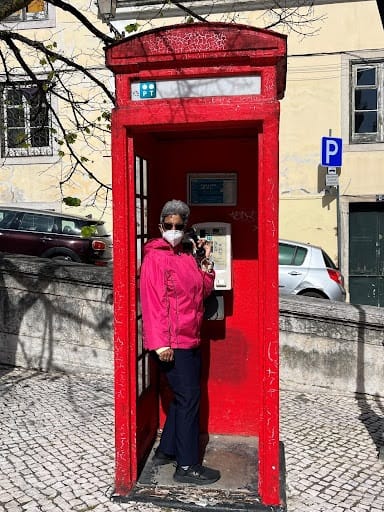
Red phone booth in Belem’s Museum area, still functional
That evening, we walked to Rua de Augusta, Lisbon’s main pedestrian street in Baxia, with its mix of restaurants and shops. We ate at LaVilla Italian restaurant, and instead of pizza, I had one of the best paellas ever.
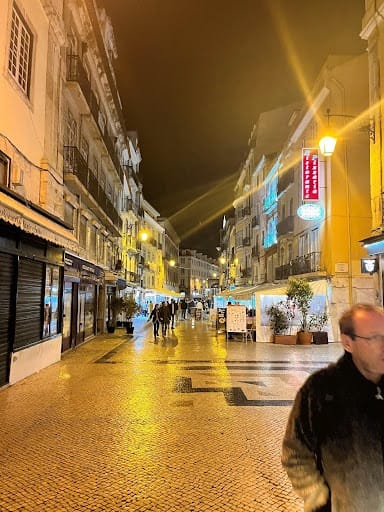
Rua de Augusta is bursting with restaurants and shops
After a great meal and a delicious 14.5% red wine, we went in for the night.
The next morning, we breakfasted at the Brooklyn restaurant and then went to the Rossio Train station for a trip to Cascais.
Cascais is a traditional and charming Portuguese fishing village on the coast. The scenic train ride took us along the Tagus river and parts of the Atlantic. When we arrived, we immediately made our way to the coastline with its beautiful homes, shops, and restaurants. After some shopping, we found a small but charming restaurant and had the most delicious lunch.
Even more surprising was a restaurant sign, “If you voted for Trump, you can’t eat here!” No Nazis!!
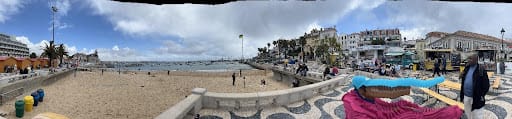
Panoramic view of the Cascais coast, homes, shops, and restaurants on the right
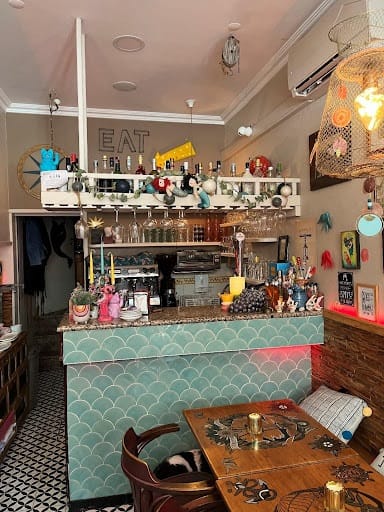
Small Restaurant in Cascais with the best Portuguese food
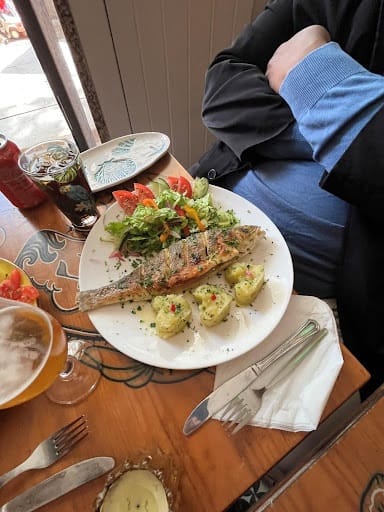
Whole fried fish Portuguese style
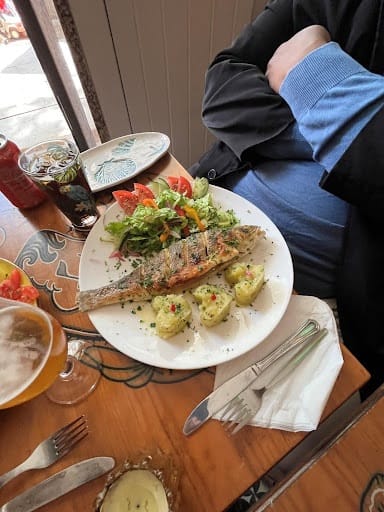
Anti-Trump sign in a Cascais restaurant
Later that afternoon, we took the train back to Lisbon and prepared for a night of jazz, food, and drink at Hernani’s Tabernaculo.
‘The Tabernaculo” is a wine bar owned by Hernani Miquel, a transplant from West Africa. The bar has a 15th-century cave that attracts various artists, ex-pats, and locals. It is a unique bar situated by the elavador da Bica, serving excellent cocktails in an atmosphere of jazz and R&B tunes. Hernani ordered our table a few entrees, sat down, and told us about his experiences in Lisbon since his 1965 arrival from Guinea-Bissau.
Hernani introduced us to a White Port and green wine, two commodities I never knew existed. We tasted Portuguese delicacies while listening to Marvin Gay, James Brown, Stevie Wonder, and other great Black artists. Hernani’s bar highlights album covers from the most famous black artists. In addition, Hernani’s Tabernaculo features live jazz from 7:30 PM Thursday through Saturday, offering great food and refreshments.
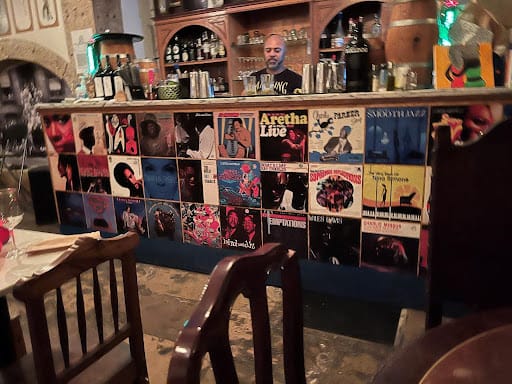
Hernani’s bartender prepares the night’s refreshments at The Tabernaculo
At The Tabernaculo, pictures of famous Black male and female artists adorn the doors of the respective restrooms.
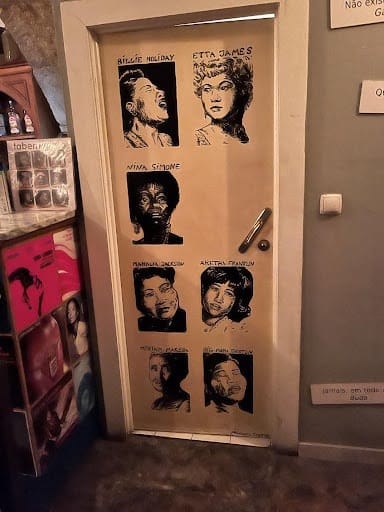
The ladies’ room at The Tabernaculo
Calling it a night, we left the Tabernaculo and went home for a needed night’s sleep.
It was Tuesday, April 12, and I looked a bit fuzzy. So I asked about haircuts for African American men. Our host told us about his barber, and I decided to go with him for grooming.
Our host took us to an African Lisbon area where I could get a haircut. The barber gave me a discount because I have so little hair on top of my head. He charged $5.00 instead of his usual $7.50. We all got a big laugh out of that. Afterward, we strolled around until dinner.
Later that evening, we went to the Creole Kitchen for dinner.
Criolense Kitchen Club, at Rua Damasceno Monteiro, 12, was started by two young African men who worked their day jobs and then opened a restaurant in the Graca neighborhood. The Creole Kitchen Club is open from 6 to 10 PM, Tuesday through Saturday. The wings, drinks, and fried tapioca are outstanding, and the restaurant is across the street from a million-dollar view of Graca.
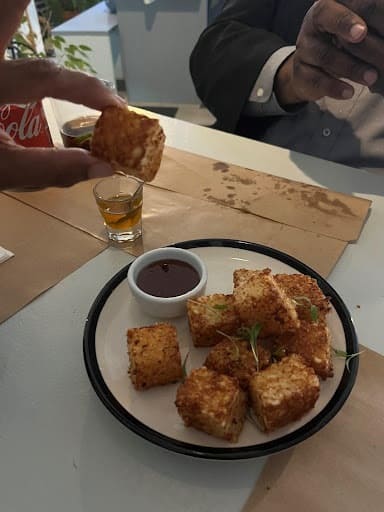
Fried Tapioca served at the Creole Kitchen Club, Lisbon
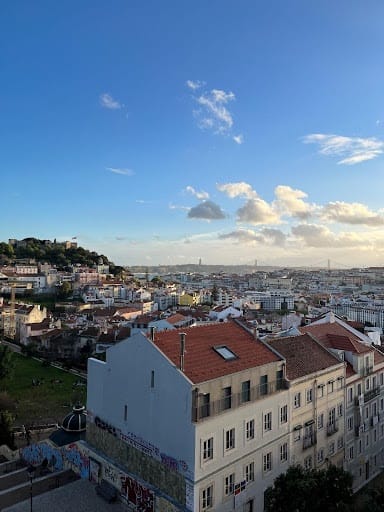
Across the street from the Creole Kitchen with a view of the bridge to Caparica in the distance
Wednesday, April 13, we woke to another beautiful day in Lisbon. After breakfast, we took a train to Sintra, a 40-minute ride from Lisbon’s Rossio station to Sintra station. We arrived at noon, hungry; we looked for a lunch spot.
We stopped at the Café Saudade, near the Sintra train station, renovated extensively in 2008-9. We enjoyed a soup and sandwich combo that was delightful. They also serve a charcuterie tray for one that is wonderful.
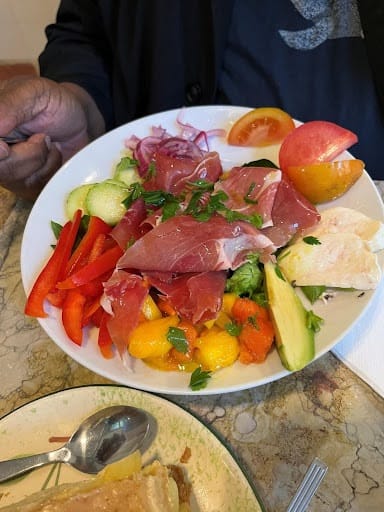
Charcutarie at Café Saudade in Sintra, Portugal
We met Diogo Nascimento as we walked around looking for someone to show us the real Sintra. An archeologist by training, Diogo was the real deal; he had grown up in Sintra and was doing tours as a second job. We asked him to take us on a real estate tour so we could price properties in this small, quaint town.
He took us to the coast, where the cliffs reminded me of “Aquinnah” on Martha’s Vineyard. The red-tiled roofs were stunning, as was the large saltwater pool at the bottom of the cliffs.
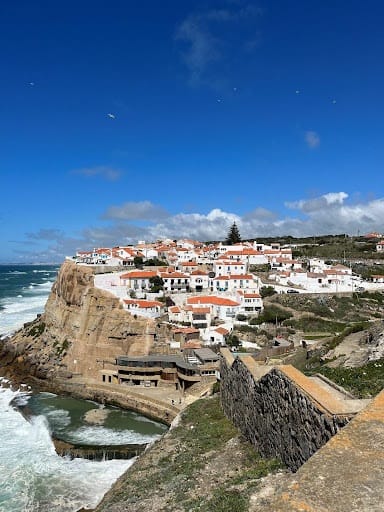
Coastal Sintra, Portugal, note the enclosed saltwater pool at the base
Diogo was knowledgeable about the area and took us to the beaches, and the wine region Colares, which is the second oldest wine region in Portugal after the Douro. We tasted their wines, reds, and whites, then Diogo took us to his home, where we had cheeses and more great wine.
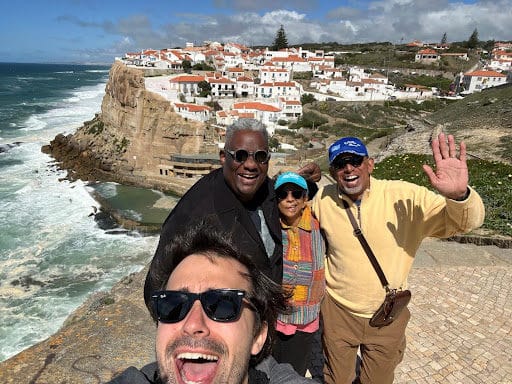
Diogo, Toby, Miriam, and I on the coast of Sintra
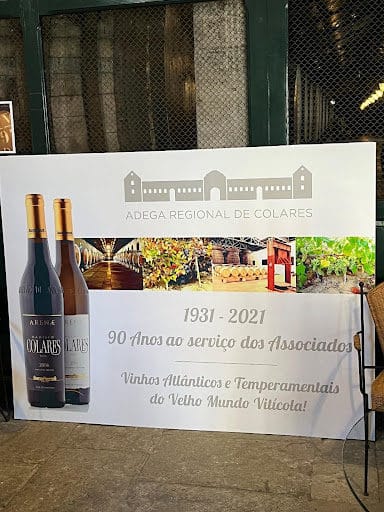
The wines of Colares
We left Sintra and that evening went to another jazz bar in Lisbon’s Baxia.
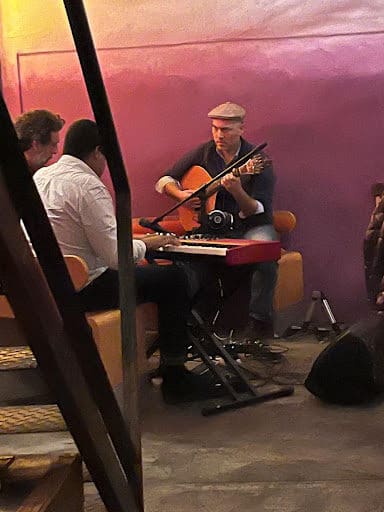
Portuguese jazz quartet
On April 14, Thursday, we looked forward to that special meal at Sofia’s Place, but we had the entire day to fill, so we went to Park of the Nations, the site of the 1998 Portuguese World Expo.
At the exact location of Expo ’98, the area transformed into a modern commercial and residential district known as the Parque das Nações (Park of the Nations). The area boasts contemporary architecture and numerous bars, restaurants, and malls. It also offers a variety of open parks and a scenic waterfront.
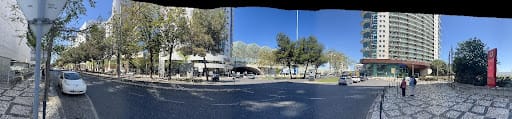
The Centro Vasco da Gama is a shopping mall in the Parque das Nações district
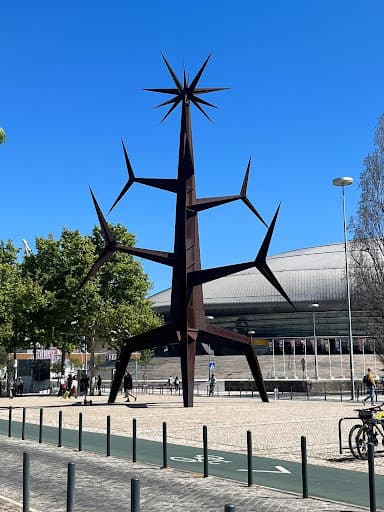
Sculpture, Parque das Nacoes, by Anthony Gormley
Later that afternoon, we visited an open-air restaurant in Belem for a bite to eat and refreshments. Outdoor restaurants are in the majority in Lisbon, a city that boasts 112 days of bright sunshine and temperatures. The hottest months are July and August when temperatures can reach the 90s. Therefore, the best times to visit are April through October. But even in the winter, the temperatures are in the upper 50s and low 60s.
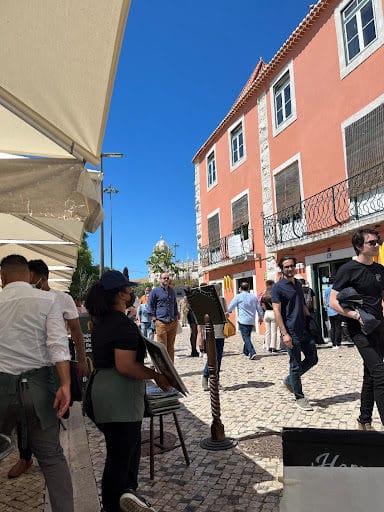
The Esplanadas em Belem, an outdoor restaurant
That evening we returned to Sofia’s Place for that special creole meal, Cape Verdian style.
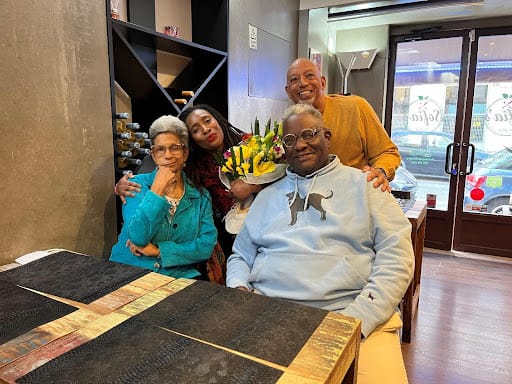
We brought flowers to Sofia in appreciation of her warmth
Friday, April 15, we took an Uber to Caparica. Remember the bridge in the picture across the street from the Creole Kitchen, the bridge to Caparica? Caparica is a beach town across the Tagus river from central Lisbon.
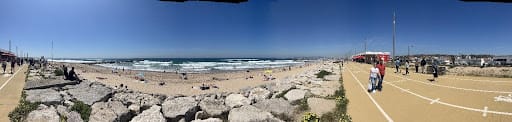
Boardwalk Caparica
Caparica boasts the largest extending beach in Portugal and has a population of less than 12000. We strolled along the boardwalk until we found a place to refresh.
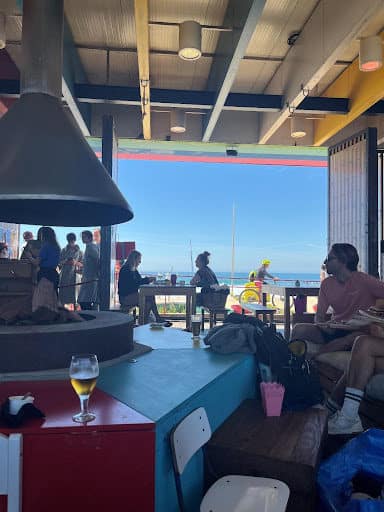
Open-air restaurant on Costa de Caparica beach
After lunch, we took time to watch the surfers. We know southern Portugal for its 100-foot waves, but they aren’t as high here in central Portugal.
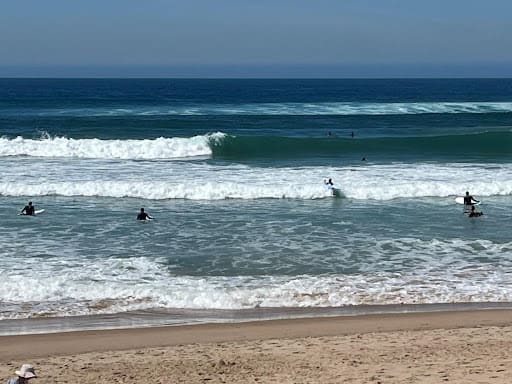
Surfers in Caparica enjoying the surf
A warm April 16 greeted us that morning. Toby had arranged a walking tour of Lisbon’s legacy of slavery.
We walked to Praca do Comercio, a grand plaza that once served Portugal’s commercial business district and a bustling slave market. We met our tour guide, Naky Gaglo, originally from Togo.
Naky doesn’t focus on the beauty of the arch; instead, Naky draws our attention to the brutality of the Portuguese slave trade and the 4.9 million Africans kidnapped from Western Africa and shipped to Brazil by the Portuguese, and the slave ships that moored along the Tagus river at the edge of the plaza.
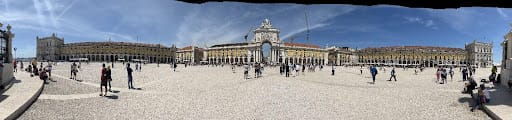
The grand plaza, and the Lisbon Arco Triunfal da Rua Augusta, panoramic view from Praça do Comércio, where the Portuguese slave trade flourished
In an interview with Jennifer Neal in 2018, Naky said, “This is the other side of Portugal that isn’t well known, the African side of it.” In Europe, they do not teach slavery the way it should be. So I’m just trying to uncover the secrets and educate people about an essential part of the history.”
Naky Gaglo’s five-hour English-speaking tour exposes the history and cruelty of the Portuguese slave trade and the Catholic church’s role.
Throughout the tour, we saw the remnants of what was once a flourishing slave trade in Lisbon. The São Domingos church, where the enslaved worshipped from the 15th century onward. Then, the long stairway slaves had to traverse that leads to the António Vieira statue in Trindade Coelho Square, a constant target for anti-racism protests.
Naky Gaglo’s African Slaves Tour: https://africanlisbontour.com
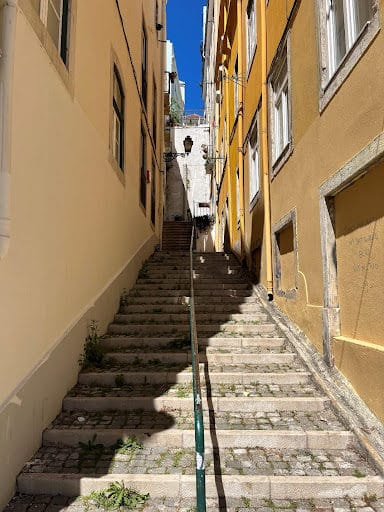
The stairway to Trindade Coelho Square slaves traversed 300 years ago
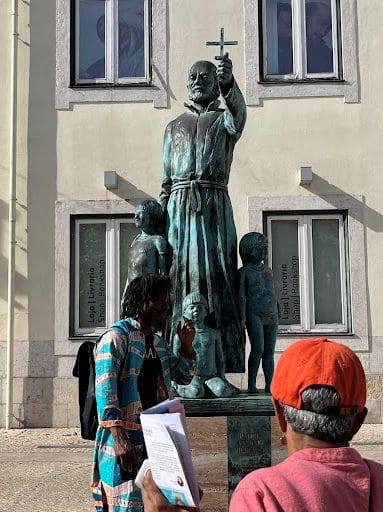
Naky Gaglo lecturing in front of the António Vieira statue in Trindade Coelho Square.
That evening, we returned to a restaurant by the coast. Again, we sat outside enjoying the evening weather. The following day, we took an Uber to the airport for our return to New Orleans.
Portugal is a magical country that is open to diversity and progress. Thousands of ex-pats live comfortably in Lisbon, Porto, Caparica, and other towns throughout Portugal. Portugal has one of the most lenient visa programs in Europe, inviting people from all over the world to come and visit and consider making Portugal their home. We are considering a yearly three months stay in this great country, especially after this visit. We plan to return in October.
Make Portugal one of your “have to visit” countries.
Great photos and content. I would love to reface your footsteps.